






Case Study: Optimizing Efficiency and Safety in Industrial Heating with the NCS-PT105 Pressure Transmitter
Project Overview
At a large-scale district heating facility, Microcyber’s NCS-PT105 Series Smart Pressure Transmitter was deployed to deliver critical pressure monitoring across the steam and hot water distribution network. The project’s primary objectives were to enhance operational safety, optimize energy consumption through precise control, and enable a predictive maintenance strategy. Key measurement points included boiler outlets, heat exchanger inlets/outlets, pump discharge lines, and critical valve manifolds.
The Challenge: Harsh Conditions and Demanding Requirements
The installation environment presented several significant challenges that required a robust and intelligent solution:
– Extreme Operating Conditions: Direct exposure to high-temperature steam and hot water lines within a boiler house subject to humidity, vibration, and potential condensate-induced corrosion.
– Space Constraints: Integration into a dense piping network with limited accessibility.
– Critical Performance Needs: The requirement for highly accurate, real-time pressure data to prevent over-pressurization, detect minute leaks, balance thermal loads, and comply with stringent safety regulations.
– Seamless System Integration: The need for direct, digital communication with the facility’s existing Distributed Control System (DCS) for continuous, reliable monitoring and control.
The Solution: Why the NCS-PT105 Was the Ideal Choice
The NCS-PT105 Series was selected based on its proven capability to meet the specific technical and operational demands of modern heating systems:
– Superior Measurement Accuracy: With an accuracy of up to ±0.075% FS, the transmitter provides the precise differential pressure readings essential for optimizing heat exchanger performance and flow measurement.
– Native Protocol Integration: Offering HART, FOUNDATION Fieldbus, and PROFIBUS PA protocols, the NCS-PT105 enables direct, plug-and-play integration into major DCS platforms (including Siemens, Honeywell, Yokogawa, Emerson, and ABB), eliminating the need for costly signal converters.
– Engineered for Harsh Environments: Certified intrinsically safe and explosion-proof (Ex d / Ex ia, NEPSI approved), the transmitter is built for hazardous areas. Its 316L stainless steel wetted parts and rugged, corrosion-resistant housing ensure long-term reliability despite thermal cycling and exposure to moisture.
– Exceptional Turndown and Flexibility: A 100:1 turndown ratio and support for differential, gauge, and absolute pressure measurements (ranges like 0–10 bar and 0–40 bar) make it a versatile solution for various points within the heating circuit.
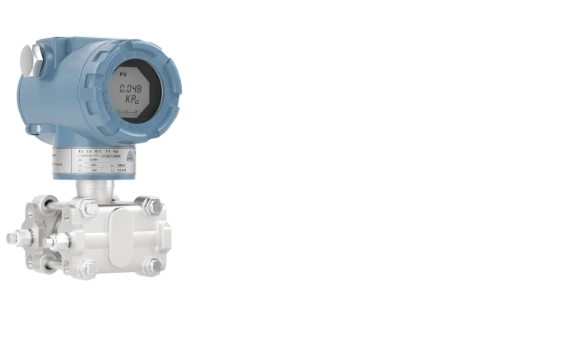
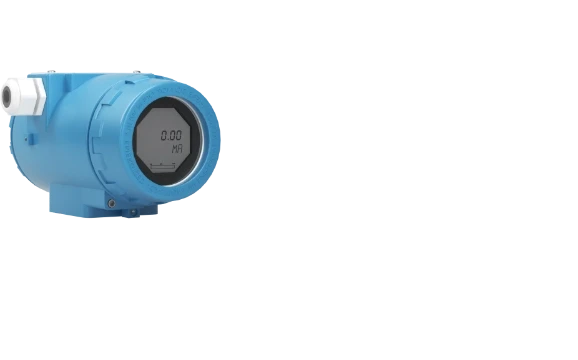
– On-Device Intelligence: The built-backlit LCD provides immediate local access to pressure, sensor temperature, and output current. Advanced onboard diagnostics and the ability to perform zero/span trimming directly on the device significantly reduce the need for field maintenance.

Implementation Highlights
– The compact, blue-housed NCS-PT105 was mounted directly onto impulse lines within a congested valve cluster, demonstrating its space-saving design.
– All field wiring was securely routed in protective conduits, ensuring signal integrity and long-term reliability in an industrial environment.
– Strategic placement adjacent to control valves allows for highly accurate, localized pressure measurement, providing critical data for the control loop.
Results: Measurable Improvements in Safety, Efficiency, and Maintenance
The integration of the NCS-PT105 delivered tangible operational benefits:
– Enhanced System Efficiency: High-fidelity pressure data enables more precise pump and valve control, optimizing heat transfer and contributing to a measurable reduction in overall energy consumption.
– Strengthened Safety Protocols: Real-time monitoring and rapid detection of over-pressure events or micro-leaks have strengthened the facility’s ability to prevent potential boiler incidents and pipeline failures.
– Reduced Maintenance Overhead: By leveraging digital fieldbus communication and predictive diagnostics, the facility shifted from time-based to condition-based maintenance, reducing unnecessary checks and minimizing downtime.
– Assured Long-Term Reliability: The transmitter has demonstrated exceptional zero-point stability and minimal drift, ensuring consistent heating supply and uninterrupted operations despite the challenging thermal environment.
This field installation confirms the NCS-PT105 as a high-performance, reliable solution for industrial heating applications, effectively combining precision, protocol flexibility, and robust construction.
Facing similar pressure monitoring challenges in your boiler, district heating network, or heat exchanger system? Our engineering team can help you specify the right configuration for your unique requirements.

 English
  Русский
  Español de México